Centralization, AI, and the human touch: what 3 operators said on our Bisnow webinar
Three multifamily operators get candid on our Bisnow webinar about centralization, staffing, application fraud, and where tech still falls short.
Key takeaways
- Back office work centralizes best
- A central role can add work to the site team
- Peter sees a bigger force on headcount than AI
- Application fraud is the newest front
- Experience still beats concessions
On Wednesday, September 30, Findigs and Bisnow hosted Reimagining Multifamily Operations, a live hour on what's moving off site, what has to stay, and where technology is pulling its weight. Three operators running very different portfolios gave straight answers, including some uncomfortable ones about staffing.
Who was on the panel
- Jeff Weinberg, Founder and President, Drexel Properties. About 1,500 apartments in Chicago, part of Collective Residential.
- Galina Shirshova, Director of Client Services, RPM Living. 10 years at Greystar, then the ownership side, now back in operations.
- Peter Ruddy, Founder and Managing Principal, Ruddy Management. Close to 7,000 apartments from Tampa Bay to Baltimore since launching in 2023.
- Moderator: Brian Korchin, Chief Revenue Officer, Findigs. Brad Amron of Bisnow opened the session.
Key takeaways
- Back office work centralizes best
- A central role can add work to the site team
- Peter sees a bigger force on headcount than AI
- Application fraud is the newest front
- Experience still beats concessions
What the panel discussed
What to centralize, and what to leave on site
Brian opened on centralization, which he called the focus du jour of the industry, and asked which functions suit a central model and which don't. Peter drew the line early: "The functions that centralize best that we've seen are those that don't require a person at a building." Galina agreed, then described a centralized role that ended up creating more work for the community manager than it took off the site team's plate. Jeff explained how Drexel stopped calling every guest card, hundreds a week, so a person only steps in once a tour is booked.
The staffing conversation
Brian asked the question a lot of teams are quietly asking: when automation and centralization take parts of a job away, how do you handle that conversation internally and keep morale up? Ruddy is still hiring, but Peter didn't soften it: "There will be a reduction in the need for staff, both at the corporate level and also at the site level." Jeff saw it differently: "A robot is replacing the tedious, busy work that the human doesn't want to do." Then Peter named the shift he thinks is replacing more roles than technology right now.
Where technology falls short
Brian turned the question on vendors, Findigs included: where has technology or centralization failed to add value, and what do providers keep missing about your business? Jeff told the story of a national firm that kept sending an exterminator to the same apartment for roaches. "Technology at some level is going to miss things." The cause they never found is in the replay, along with Peter's test for AI at the site level: what do you do when a dog jumps off the roof?
Fraud on the way in
Brian moved to the rental application. Even with a fast first response, he said, things can go off the rails there, especially with an applicant who doesn't want to link a bank account. Jeff was blunt. Drexel now asks applicants for a selfie with their ID, and it's still seeing AI-generated pay stubs, IDs, and even credit reports. "The biggest challenge that we're facing now is essentially the fraud on the way in." He also explains a new law in his market that makes the job harder.
Audience Q&A
Brian closed with questions from the audience, including how to convert more qualified applicants into signed leases when they're looking at several places at once. Galina pointed past price: "We can give concessions all day long, we can also reduce pricing all day long, but what truly differentiates you from your competitor is the experience we provide for them." The panel also took on management fees and whether rents have hit bottom, and Peter named the markets where he thinks rents haven't bottomed yet.
Where to start on your own portfolio
- Sort your site team's task list. Work that needs a person at the building, and work that doesn't.
- Treat application documents as things to verify, not collect. Pay stubs, IDs, and applicant-supplied credit reports can all be generated now.
- Train the site team before any tool goes live. A resident should never be the one who tells your team about your own technology.
Get the full hour
The replay has the rest: why a centralized role Galina saw added work instead of removing it, the staffing shift Peter thinks matters more than AI, the new law Jeff says makes applications harder to trust, and where the panel thinks rents go next.
Watch the full replay of Reimagining Multifamily Operations →
Keep reading
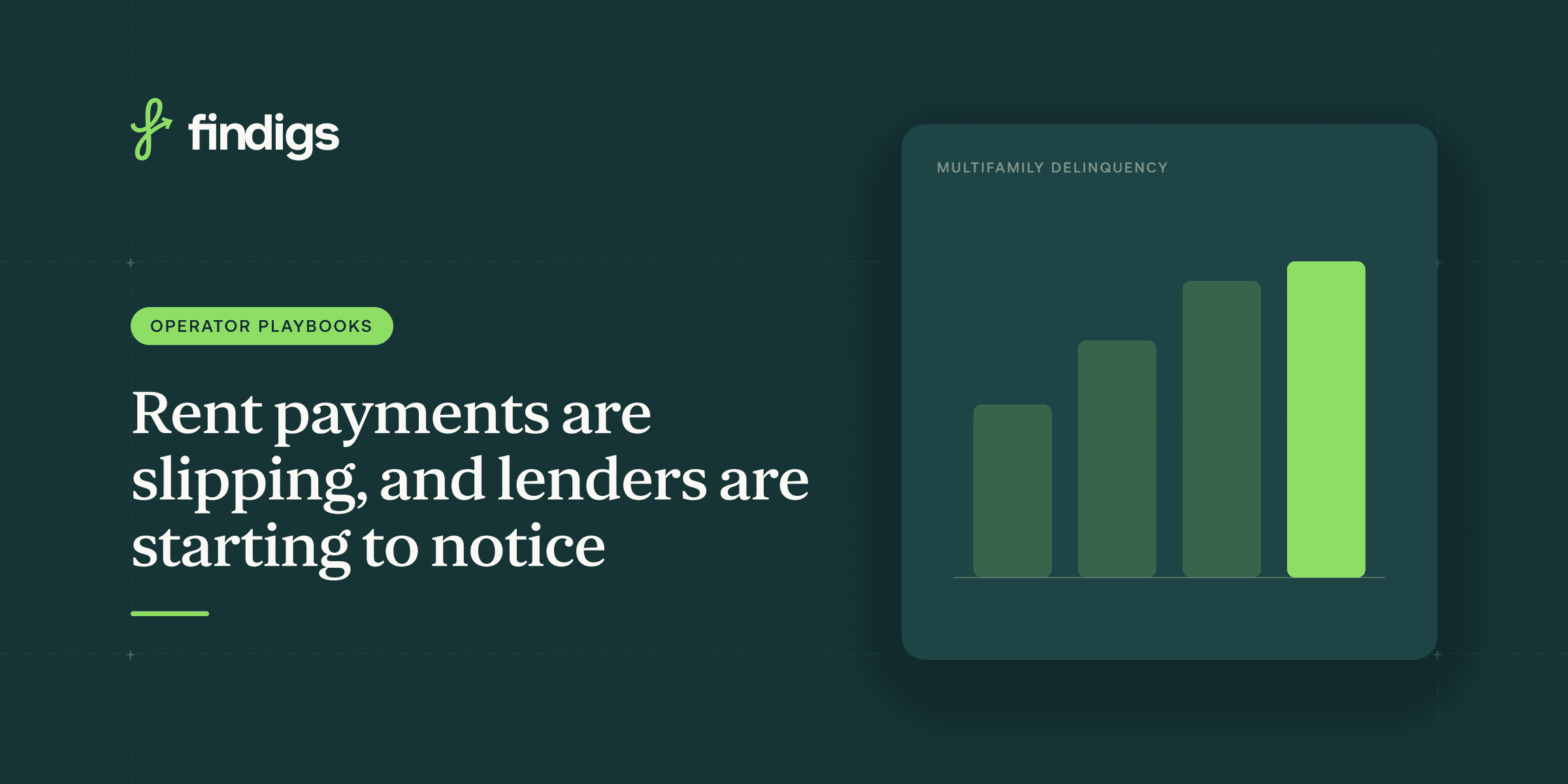
Rent payments are slipping, and lenders are starting to notice
A new Urban Institute survey shows more households paying rent late or partially in 2025, led by renters who earn a moderate living. Freddie Mac's loan data shows that pressure moving up the chain to apartment owners.
AI Tenant Screening: How AI Is Transforming Leasing Decisions
See how AI tenant screening speeds verification, catches fraud, and supports fair housing, and where automated leasing decisioning goes further.
Why a fully integrated application experience can dramatically help your screening process
Learn how a fully integrated rental application and decisioning platform helps property teams reduce manual work, prevent fraud, and move qualified renters forward faster.
Stop screening, start leasing
See how Findigs decisions every application automatically.