Service Animal vs. ESA: What Property Managers Need to Know
Service animals and emotional support animals arrive at the leasing desk looking identical, but two statutes govern them and the rules diverge on what you may ask, what you may charge, and when you may say no. This guide sets out the differences a property manager has to act on.

Key takeaways
- HUD says more than 1 in 5 fair housing complaints involve emotional support animals.
- Service animals require task-specific training; ESAs do not, changing documentation, questioning, fees, and denial rules.
- Assistance-animal requests require individualized evaluation and documented decisions; inconsistent handling creates fair housing risk.
- Findigs automates financial and background screening with one policy and a full audit trail, while assistance-animal decisions remain with operators and counsel.
More than one in five of FHEO's cases now involve untrained emotional support animals (ESAs), as per HUD's May 2026 enforcement guidance. The two categories of service animals and ESAs reach the leasing desk looking identical: an applicant with an animal and a letter.
The difference is training. A service animal is individually trained to do work or a task related to its handler's disability. An emotional support animal is not. That fact drives what you may ask, what you may charge, and when you may lawfully say no. The guidance beneath the statute moved in 2025 and 2026, and most leasing policies have not caught up.
What Is a Service Animal?
Under the ADA's service animal requirements, a service animal is a dog trained for a job related to its handler's disability. Comfort alone is not a task, so an emotional support animal falls outside it. When the need is not obvious, staff may ask two questions: whether the dog is required because of a disability and what task it performs.
Which Housing Types Are Covered
An operator works under two statutes: the ADA in public areas and the Fair Housing Act inside the dwelling. The exemptions below are narrow and leave many rentals to state law.
What Is an Emotional Support Animal?
An emotional support animal is an animal whose presence eases one or more symptoms or effects of a person's disability. It is not trained to perform a specific task, and that single fact is what separates it from a service animal: a service animal does a job, an emotional support animal helps by being there.
How ESAs Differ From Service Animals Under the Law
The emotional support animal request reaches you under the Fair Housing Act rather than the ADA, so it is handled as a reasonable accommodation based on the facts of the individual case, not as a category you approve or refuse on sight. Once approved as an accommodation, the animal is not treated as a pet, which is why your pet policy no longer applies.
That distinction also matters for terminology. Under the Fair Housing Act, the governing term is assistance animal, which includes both trained animals and animals that provide disability-related emotional support. Service animal is the narrower ADA term. Unlike the ADA, the Fair Housing Act does not impose a species or training requirement; the question is whether allowing the animal is a reasonable accommodation for the individual's disability.
What Documentation a Valid ESA Request Requires
When the need is not obvious, you are entitled to information establishing a disability-related need, not a diagnosis. The reliability test is personal knowledge of that need, which lets you verify an ESA letter without overstepping.
The documentation elements above reflect general standards widely used in the industry. Because the 2020 HUD guidance that codified these standards has been withdrawn, state law carries more weight in determining what documentation is sufficient.
Service Animal vs. ESA: The Differences That Change What You Can Do
Service animals and emotional support animals may look the same at the leasing desk, but the rules governing them are different. The distinction affects what property managers can ask, what they can charge, and when they can deny a request.
The Service Animal Rules That Override No-Pet Policies
A qualifying assistance animal is not subject to your property's no-pet rules. That also means certain screening requirements, including breed restrictions and demands for certification or task demonstrations, are off the table.
Breed, Size, and Weight Restrictions Cannot Apply
The ADA does not restrict service animal breeds. A weight cap, breed list, or size limit does not reach an animal that qualifies under either statute.
Certification, Registration, or Task Demonstration Cannot Be Required
Four moves are off the table. Do not ask what the disability is, require medical documentation, require an ID card or training paperwork, or ask for a demonstration.
What the Fair Housing Act Actually Requires for ESA Requests
Three obligations do the work in practice, and the first is where most operators create exposure.
1. Pet Deposits, Fees, and Rent Cannot Be Charged
An assistance animal approved as an accommodation is not a pet, so pet fees, deposits, and pet rent do not attach, and charging them can amount to refusing it. That holds most squarely for an animal trained to do work or tasks, the standard HUD now applies. For an untrained emotional support animal, the position is less settled, because HUD's 2020 guidance stating the no-fee rule was withdrawn and is no longer authoritative. The Act itself is unchanged; a resident may sue within two years, whatever HUD decides, and state and local laws are untouched.
2. Reasonable Accommodation Must Be Made Unless Denial Is Legally Justified
Refusing a reasonable accommodation in rules, policies, practices, or services is discrimination where it may be necessary for equal opportunity to use and enjoy a dwelling. Evaluate each request on its facts, record the decision, and answer it. The duty stops at an undue burden or a fundamental alteration.
3. When an ESA Letter From a Third-Party Website Is Not Valid
The deficiency in a purchased letter is the absence of a genuine evaluating relationship, not the applicant's motive. A document issued without an evaluation says nothing about a disability-related need, and it will not meet a state-law floor. This is general information, not legal advice, and fair housing counsel should review your policy.
When a Property Manager Can Legally Deny an Assistance Animal Request
Four grounds hold up, and each turns on evidence about that specific animal or that specific letter.
- The Animal Poses a Direct Threat to Others: The Act does not require a dwelling where the tenancy is a direct threat to health or safety. Assess the animal's conduct, not its breed.
- The Documentation Is Not From a Qualified Provider With a Genuine Relationship: A provider with no evaluating relationship cannot establish a disability-related need. Record what was missing.
- The Animal Has Caused Significant Property Damage: The same statutory sentence covers substantial physical damage to property, evidenced and specific to that animal.
- The Species Is Illegal to Own in That Jurisdiction: No request compels you to house an animal that state or local law prohibits. Treat every ground here as individualized, never categorical.
Where Property Managers Create Fair Housing Risk Without Realizing It
Small inconsistencies in how assistance-animal requests are handled can create fair housing risk. The key is to apply the same process, document the reasoning, and avoid treating a qualifying assistance animal like a pet.
How Findigs Supports Fair Housing Compliance in the Leasing Decision
Findigs is the residential leasing decisioning platform for property managers that runs screening and underwriting on one platform, then delivers the result that manual review never could: an automatic yes or no on every application, not a score to interpret or a flag to chase. Findigs does not adjudicate assistance-animal requests. That decision stays with the operator and their counsel. Findigs decides the financial and background criteria.
- One Screening Policy Applied Automatically to Every Application: Criteria are configured once and applied the same way to every applicant, so the standard never shifts.
- Full Audit Trail on Every Leasing Decision and Its Criteria: Every decision records the criteria applied and the result. A verbal call leaves no such record.
- No Manual Reviewer Variation in the Financial Screening Step: Income, credit, and background criteria return the same yes or no against one written policy rather than reviewer judgment.
The payoff is revenue quality. Units fill without waiting on a review queue, and the residents behind those decisions pay, lifting occupancy and collections together, the two inputs to Net Operating Income.
Conclusion
Service animals and emotional support animals may fall under different rules, but the property manager's job is the same: apply the right standard, evaluate the facts, and document the decision. A consistent process helps protect fair housing compliance without turning every assistance-animal request into a manual review.
That same consistency matters across the rest of the leasing decision. Findigs applies a single screening policy to every application, automating financial and background decisions while keeping a complete record of the criteria and outcome. The result is a faster path from application to signed lease, with Findigs customers seeing bad debt fall by up to 60%. Every decision is also backed by a contractual fraud guarantee, the only one in the category.
Asaf Raz is VP Marketing at Findigs, with 12+ years in tech marketing. He covers rental market trends, market analysis, and industry news.
Frequently asked questions
Should an ESA request be handled inside the normal pet application process?
Not without a separate accommodation path, because assistance-animal requests can trigger different legal and documentation requirements than ordinary pet applications.
- Let applicants identify that they are requesting a disability-related accommodation before normal pet rules are applied.
- Avoid automatically applying pet deposits, breed filters, weight limits, or pet rent while the accommodation request is being evaluated.
- Keep the accommodation decision separate from financial and background screening so one workflow does not contaminate the other.
- Train staff to distinguish “pet verification” from “assistance-animal accommodation review.”
How can multi-property operators keep assistance-animal decisions consistent across a portfolio?
Use a centralized policy, structured evidence requirements, and documented exception handling rather than allowing each property to create its own standard.
- Define which staff roles may approve, deny, request clarification, or escalate an accommodation request.
- Use the same documentation checklist across comparable properties, then add state-specific overlays where local law differs.
- Require written reasons for exceptions so operators can audit whether similar requests are receiving similar treatment.
- Review denial and escalation patterns periodically for property-level or reviewer-level inconsistencies.
The same consistency principle applies to resident screening more broadly; Findigs explains how standardized workflows support fair housing objectives in automated screening and fair housing.
What should operators audit when federal ESA guidance changes?
Audit the policy language, staff scripts, documentation standards, fee rules, and escalation procedures, not just the legal memo sitting behind the policy.
- Search leasing templates and SOPs for requirements that were copied directly from withdrawn or superseded guidance.
- Compare federal requirements with state and local rules before standardizing one national process.
- Review automated workflows to ensure they do not impose pet restrictions before an accommodation decision is complete.
- Version-control policy changes so the operator can show what standard was in effect when a past request was decided.
For additional operational guidance on evaluating ESA documentation, review Findigs’ ESA letter verification guide.
How can Findigs keep pet verification from slowing down the rest of the application?
Findigs integrates pet verification into the screening experience so pet-related information can be collected without turning the broader application into a separate manual workflow.
- Keep pet information within the application flow rather than relying on disconnected emails, forms, or follow-ups.
- Separate pet verification from the operator’s assistance-animal accommodation determination.
- Reduce leasing-team coordination across multiple systems during application review.
- Maintain a clearer workflow for applications involving pets while preserving operator control over accommodation decisions.
See how Findigs incorporates pet verification into resident screening.
Keep reading
How Much Does Tenant Screening Cost? A Complete Breakdown for Property Managers
Tenant screening is priced per applicant, and in several states the ceiling is written into law. This guide covers what a report actually contains, what moves the price, how the landlord-paid and applicant-paid models compare, and how to judge whether the spend returns anything.
Landlord Income Verification: How to Confirm What Applicants Actually Earn
Landlord income verification confirms an applicant’s income against a direct source, not an uploaded document. This guide covers the income types that need different evidence, the Fair Housing rules that apply, a four-step process, and the signals that mark a fabricated pay stub.
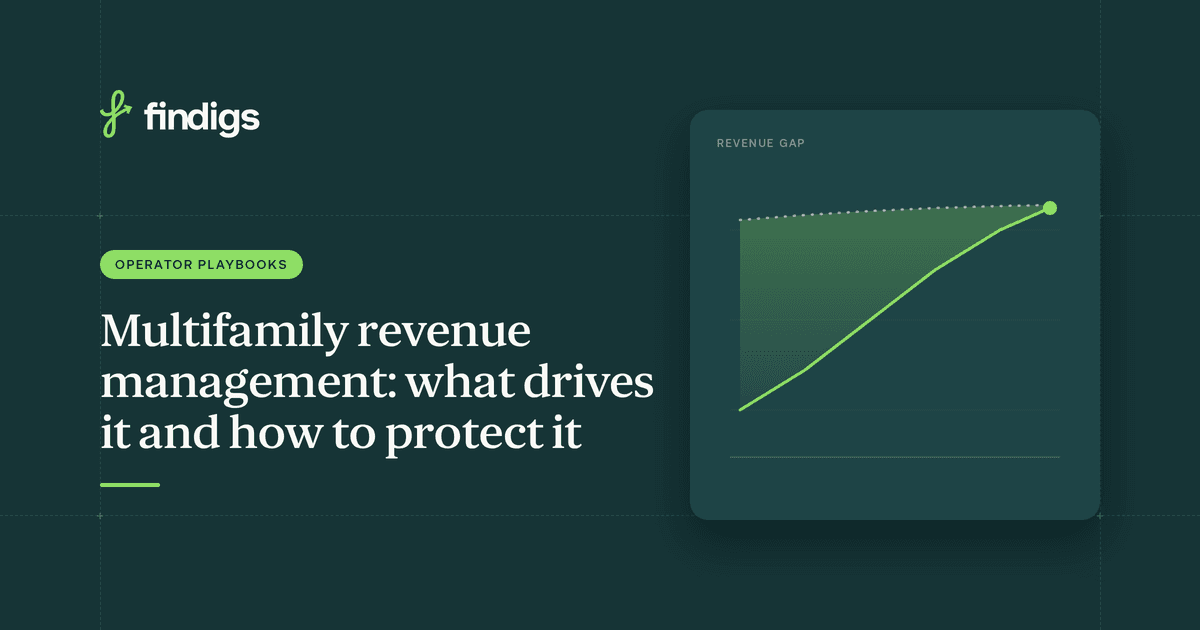
Multifamily Revenue Management: What Drives It & How to Protect It
Multifamily revenue management protects more than asking rent. It connects pricing, lease timing, occupancy, approval quality, and collections so more leased revenue reaches Net Operating Income.
Stop screening, start leasing
See how Findigs decisions every application automatically.