Leasing as a brand touchpoint: what renters expect from the application process
Discover how a clear, mobile-first application experience helps property teams build renter trust, improve conversion, and turn leasing into a stronger brand touchpoint.


Key takeaways
- 88% of renters want to complete at least some of the application online.
- Faster, clearer application workflows reduce drop-off, improve conversion, and lower resident acquisition costs.
- Findigs reports a 3.4-hour median decision time, with 45% of applications decisioned outside business hours.
- Automated identity and income verification replaces manual checks and reduces fraud.
A prospective renter scrolls through listings on a smartphone during their morning commute, taps ‘Apply,’ and expects the next steps to feel as simple as streaming a show.
Most renters do. According to a 2025 industry research report on leasing trends, 88% want to complete “at least some” of the application online. They approach applying with habits shaped by mobile banking and digital onboarding, where they’re used to quick updates and clear instructions.
The application is the brand impression. A smooth process signals credibility and care, while a clunky one creates doubt before the potential resident has even seen the unit.
As the only decisioning platform in the market, Findigs automatically provides yes/no recommendations for applicants, turning the application process into a brand touchpoint that feels fast and clear from the first click.
Leasing teams that refine this stage gain an advantage that shows up in increased occupancy and fewer walkaways. Those who ignore it see early dropout, slower decision cycles, and negative feedback that travels quickly.
The renter’s mindset: What changed
When we can send money in seconds or open new accounts with a photo and a tap, our expectations are influenced by instant approvals. A recent survey shows that 76% expect a response from a property manager within a day. And more than a quarter (27%) expect it within just a few hours.
Finance, retail, and travel apps all teach users to expect simple steps and real-time updates. Regardless of the industry, consumers measure every digital experience against the ones that feel effortless. Amazon sets the bar for speed and affordability and Uber sets it for access, while food delivery apps show what true convenience looks like.
Fairness has become equally important. Renters pay attention to how housing decisions are made. They hear stories about people being judged with bias or denied without explanation. It’s only natural that they want to be assured by the leasing agent that the rules are the same for everyone; that the process is honest and easy to understand.
The implications are clear:
- When a property management process drags, the brand suffers.
- Renters ask themselves why an apartment application feels slower than ordering a ride or groceries.
- They expect clarity on criteria, timelines, and communication.
- Every step of the application signals something about your values as a housing provider.
The application process as brand touchpoint
From the instant someone clicks the ‘Apply’ button until the final approval message appears, each click (and each wait time) sends a message about how your company operates.
The journey contains a series of micro-moments. A renter opens the apply link, then sets up an account. They upload documents, then check for updates. They wait for a decision, then move into onboarding tasks. Each moment is a chance to show that your brand values clarity and care. But each moment can also show the opposite.
The application is often the first real interaction a potential resident has with your team. It sets expectations long before they sign a lease or step into a unit. A fast, clear, and supportive process creates confidence. A slow or inconsistent one creates friction that renters remember.
Reduce CAC with faster decisioning
Improving the application experience is a strategic choice because process design shapes how your brand is perceived. A streamlined path reduces confusion and shortens the time to decision. It also supports performance metrics that leasing teams already track:
- Drop off rates fall.
- Conversion rises.
- Response times tighten.
- Satisfaction improves.
A clear process reduces risk. Friction creates uncertainty. Hidden criteria and unpredictable steps lead to negative reviews and frustrated renters. A transparent and organized path prevents that fallout.
It also strengthens your reputation in a crowded market. A modern and fair application experience becomes a reason renters choose you over the property down the street.
By shortening the path from interest to approval, leasing teams lose fewer qualified applicants to competing properties and spend less replacing drop-offs with new leads. That makes each marketing dollar work harder, lowering the cost to acquire each new resident.
Findigs helps leasing teams deliver that kind of fast, transparent application experience at scale, with automated decisioning that keeps prospects moving even when offices are closed. In fact, 45% of applications are decisioned outside of business hours, and the median decision time is just 3.4 hours. Findigs reduces drop-off, improves conversion, and ultimately lowers CAC.
Drop-off is only half the math: how many leads it takes to sign one lease is the other half, and Findigs measures that ratio by channel and property.
What renters expect from each phase
Expectations shift as applicants progress, with each stage carrying its own pressure point. Property managers and leasing agents need to ensure that there is a clear and predictable flow to keep them engaged. In this on-demand economy, even the slightest bit of tension can send them looking elsewhere.
Findigs provides all of the below convenience.
Apply and onboarding
The first steps should feel simple. Renters expect a mobile-first experience that works without struggle. They want to know what documents they need and how long the process might take, so it’s critical that you make this clear upfront to avoid surprises. Remember: a short explanation goes a long way.
Verification and decisioning
This is where trust is won or lost. Renters want clear insight into what is being checked and why it matters. They look for a predictable timeline, especially after growing used to quick decisions in other parts of their lives. Support should be easy to reach and, preferably, 24/7.
Inclusive verification paths matter too. Applicants want to know the process can handle different situations, whether that means verifying support animals or reviewing income that doesn’t come from a standard paycheck. Frequent updates help them stay grounded. Silence, even a short period, creates uncertainty that can lead to drop off.
Findigs is the only platform that simply says yes or no, so applicants get their next steps quickly.
Approval to occupancy
Once approved, renters expect momentum. They want a clean hand off from screening to move-in without repeated steps. Companies must provide clarity on the unit, terms, and fees.
Findigs provides resources that help your new resident get ready for move-in day. Checklists, local service tips, and simple reminders reduce stress. These final touches make the renter feel supported as they enter the next phase of their tenancy.
Findigs’ automated decisioning platform is designed with the applicant in mind
Findigs gives property managers same-day decisions by removing the uncertainty that slows teams down. Applicants move through a mobile-first renter experience flow that guides them step-by-step. Automated income and identity verification replaces manual checks, reducing fraud. Transparent requirements and updates help applicants understand what is happening behind the scenes.
Broad income inclusivity, fast support animal verification, and accessible UX are just a few ways Findigs is designed for every renter. Findigs aims to reduce stress, build trust, and make applicants feel like the process was made with them in mind.
Findigs also strengthens the transition from approval to move-in. Incoming residents receive smart resources that help them prepare for their first day in the unit, from how to safely build credit to tips for renting with pets. They also gain access to essential service shortcuts that cut down on the back-and-forth that often slows onboarding.
Property managers benefit from cleaner verification workflows and faster outcomes. Renters benefit from a process that feels fair, supportive, and modern.
Steve Carroll co-founded Findigs in 2018 and runs it as CEO. He writes about strategy, fraud accountability, and where leasing decisioning is headed.
Frequently asked questions
How can property managers reduce application drop-off without weakening screening standards?
A faster application experience comes from removing unnecessary friction around screening, not from relaxing qualification criteria.
- Show required documents, screening criteria, fees, and expected next steps before applicants begin.
- Optimize every verification step for mobile so applicants do not need to switch devices or channels.
- Track where applicants abandon the process and prioritize fixes at the highest-friction steps.
- Keep screening requirements consistent while simplifying how applicants satisfy them.
For a deeper look at designing a lower-friction renter journey, explore Findigs’ application experience.
What should leasing teams communicate while an application is being reviewed?
Applicants should always know what has been completed, what still requires action, and what will happen next.
- Trigger status updates when an application changes stages rather than relying on applicants to follow up.
- Make requests specific, for example, identify exactly which document or verification step is incomplete.
- Give applicants a clear path for resolving exceptions instead of sending them back through the entire process.
- Separate applicant-required actions from internal review so renters know when they actually need to respond.
Findigs’ renter application process resource provides additional context on what applicants encounter during this journey.
Which leasing metrics can reveal whether the application experience is hurting conversion?
Operators should measure the application as a funnel, connecting processing speed and abandonment to eventual lease conversion rather than treating screening as an isolated workflow.
- Monitor application-start-to-completion rates by property and acquisition channel.
- Segment decision times by applications requiring manual intervention versus those moving through automatically.
- Measure abandonment at individual verification stages to identify operational bottlenecks.
- Connect screening outcomes with lead-to-lease conversion so faster processing can be evaluated against actual leasing performance.
Operators focused on turning more prospects into residents can explore Findigs’ approach to lead-to-lease conversion.
How can operators make screening more consistent across a large portfolio?
Centralizing policy criteria and automating repeatable decisioning steps can reduce property-by-property variation while preserving defined exception workflows.
- Translate screening policies into standardized criteria rather than relying on individual leasing agents to interpret them.
- Define which scenarios can be automatically decisioned and which require escalation.
- Track exception frequency by property, region, and criterion to identify inconsistent processes.
- Review application and decision trends as policies or portfolio conditions change.
See how Findigs approaches standardized screening rules through policy criteria.
How does Findigs help keep applications moving outside leasing-office hours?
Findigs uses automated underwriting and decisioning to move eligible applications through the review process without requiring every step to wait for manual leasing-team intervention.
- Automate repeatable application-review steps against established policy criteria.
- Reduce queues created when applications arrive at night or on weekends.
- Route cases requiring additional review into exception workflows rather than manually reviewing every applicant.
- Give leasing teams more capacity to focus on applicants and situations that genuinely require human attention.
Learn more about Findigs’ automated application review and decisioning capabilities.
Keep reading
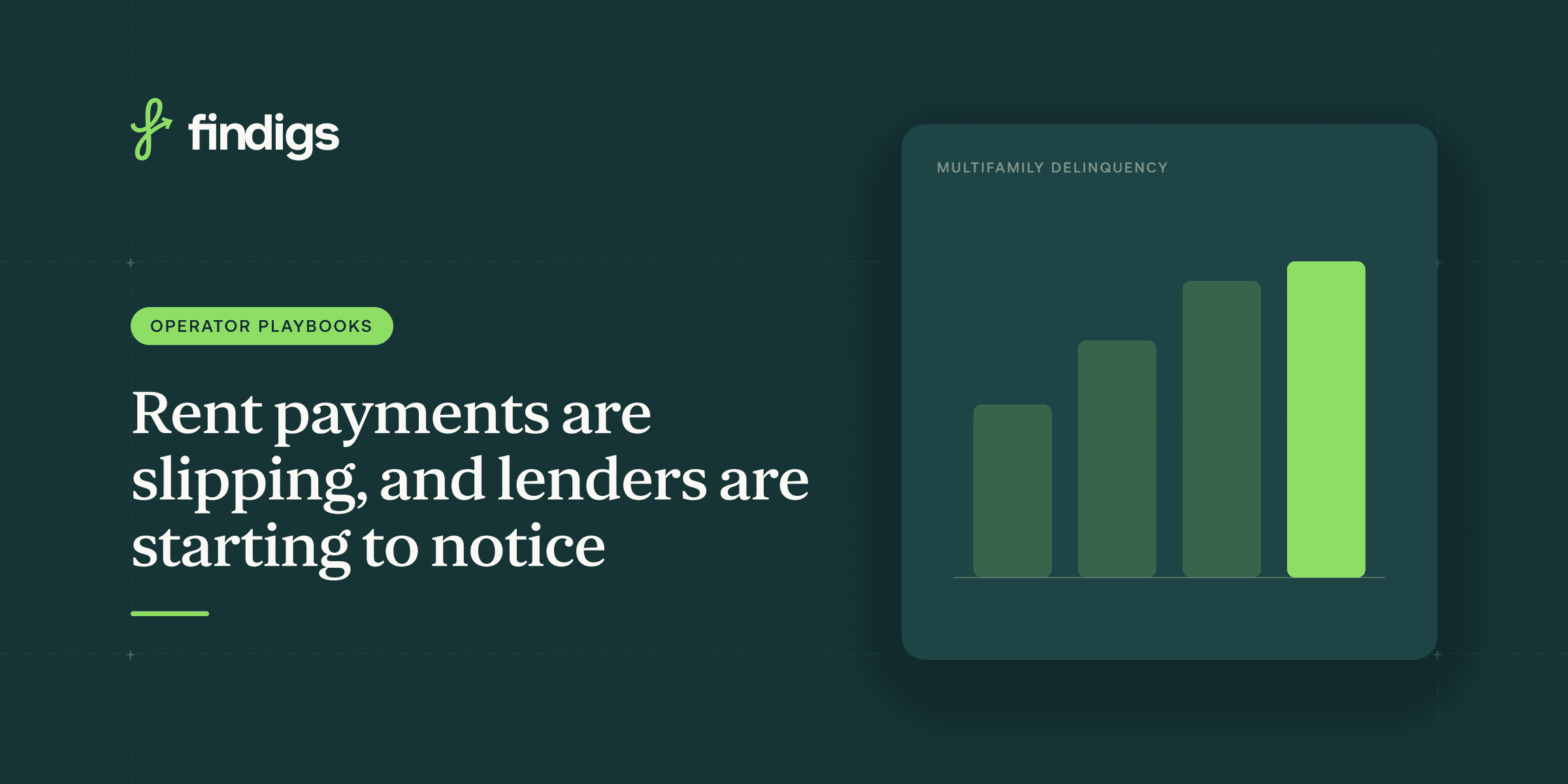
Rent payments are slipping, and lenders are starting to notice
A new Urban Institute survey shows more households paying rent late or partially in 2025, led by renters who earn a moderate living. Freddie Mac's loan data shows that pressure moving up the chain to apartment owners.
AI Tenant Screening: How AI Is Transforming Leasing Decisions
See how AI tenant screening speeds verification, catches fraud, and supports fair housing, and where automated leasing decisioning goes further.
Why a fully integrated application experience can dramatically help your screening process
Learn how a fully integrated rental application and decisioning platform helps property teams reduce manual work, prevent fraud, and move qualified renters forward faster.
Stop screening, start leasing
See how Findigs decisions every application automatically.